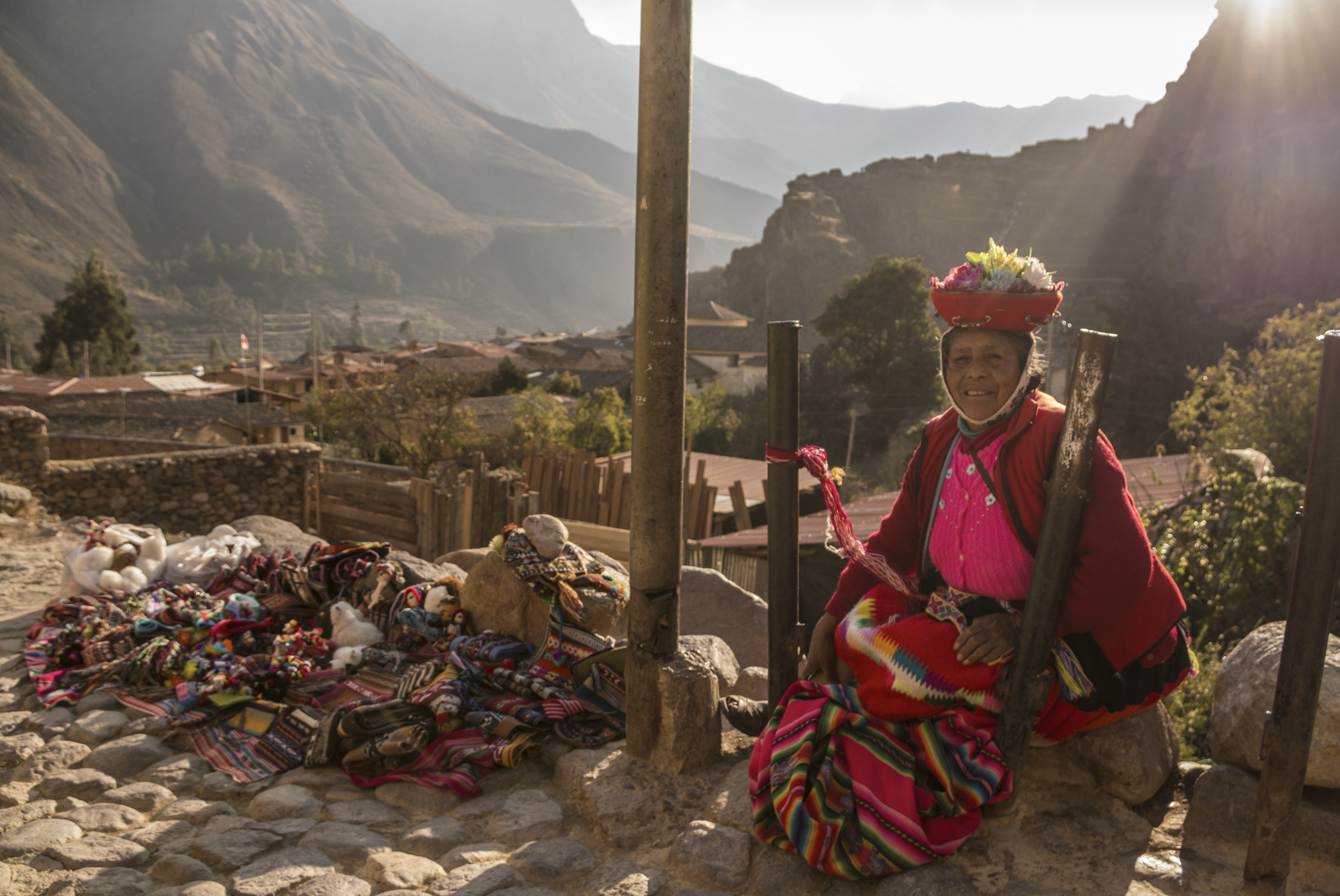
Global Threads: Heritage, Innovation & Sustainability in the Andes (Peru, Bolivia & Ecuador)
Public Research Summary
By Dr Laura Bunt-MacRury & Lic. Aracely Roldan Montesinos
Funded by the University of Glasgow — Global Challenges and International Development (GCID) Project, 2026
About This Project
Global Threads is a collaborative research project led by the University of Glasgow's School of Political and Social Sciences, in partnership with community organisations, NGOs, and academic institutions across the United Kingdom, Peru, Bolivia, Ecuador, Spain, and the United States. The project is funded through the University of Glasgow's Global Challenges and International Development (GCID) Small Grants Programme and brings together expertise spanning economic and social history, creative industries and cultural policy, microfinance and development economics, digital financial services, intellectual property law, and applied anthropology.
The project's fieldwork was conducted in the Cusco region of southern Peru — principally in high-altitude communities of the Quispicanchi province — and in Sucre and surrounding communities in Bolivia, in partnership with Andean textile NGOs whose decades-long relationships with communities were essential to the ethical conduct of this research. Fieldwork drew on focus groups, community interviews, and in-depth oral histories conducted in Spanish and Quechua with women weavers, association leaders, and community representatives, as well as with NGO directors, public sector practitioners, and specialist advisers in intellectual property, microfinance, and digital markets. Fieldwork was conducted in the Andes between April and June 2026. Knowledge exchange workshops bringing together community representatives and international experts will be held at the University of Glasgow on 7th July and in Cusco, Peru, on 15th July.
The research is deliberately co-produced: its questions, design, and priorities were developed in genuine dialogue with the communities at its centre, not imposed from outside. The fieldwork was conducted under informed consent protocols respecting community anonymity, and findings are being returned to community partners in forms that are useful and accessible to them before wider academic publication. This report offers a public-facing overview of the project's context, approach, and emerging themes, and sets out the pathways for future action that the research has identified as most urgent.
The project partners include NGOs with long-established working relationships with indigenous weaving communities in Peru and Bolivia, the World Bank, and the University of Glasgow. The project additionally draws on the expertise of UNESCO-affiliated organisations engaged in the documentation and preservation of intangible cultural heritage across the Andean region. This breadth of institutional partnership reflects the project's central premise: that the challenges facing Andean weaving communities are too multi-dimensional to be addressed from any single disciplinary or institutional vantage point.
Part I: The Problem — Weaving Communities at a Crossroads
The Andean wool and textile economy is one of the oldest continuously practised craft traditions in the world. For millennia, communities across the highlands of Peru, Bolivia, and Ecuador have raised camelids — alpaca, llama, vicuña — and transformed their fibre into some of the world's most technically complex and culturally rich textiles. The pallay iconography woven into highland textiles across the Cusco and Bolivian altiplano regions is not merely decorative: it is a writing system of extraordinary depth, encoding cosmological knowledge, territorial identity, and social memory accumulated across generations. A single poncho or manta woven by a master weaver in Quispicanchi may carry within its patterns a visual vocabulary whose meaning is legible only to those who have spent years learning it.
Today, Peru and Bolivia together export nearly 10,000 tonnes of camelid wool annually, generating approximately four billion US dollars in value for the global fashion industry. Nearly 1.2 million indigenous people depend on camelid wool and textile production for their livelihoods. Peru alone accounts for approximately 87 percent of global alpaca fibre production, most of it produced in highland communities where women undertake the full production cycle: raising animals, shearing, cleaning and sorting fibre, hand-spinning yarn, preparing natural dyes from local plants and minerals, and weaving complex traditional designs using backstrap looms passed down through generations. Yet despite this extraordinary productive and cultural contribution, community producers capture less than one percent of the overall profits generated by their work. The vast majority of the value created by Andean weavers is extracted by commercial intermediaries, processing corporations, and fast-fashion retailers operating far from the communities whose knowledge, labour, and ancestral traditions make the product possible.
This structural inequity sits at the heart of the challenges facing weaving communities today. Over the past two decades, the sustained efforts of indigenous-led organisations, women's collectives, and development NGOs have achieved genuinely significant results: traditional techniques have been revitalised, new generations trained, markets opened, and women's economic participation substantially strengthened. Indigenous-led textile organisations across the region have been recognised internationally for their role in preserving and commercialising traditional textiles while maintaining genuine community ownership of the process. Partner NGOs in Bolivia have done comparable work across indigenous communities of Sucre, Potosí, and the Bolivian altiplano, documenting and revitalising textile traditions that had been pushed to the margins by colonial and post-colonial economic structures. These achievements are real and deeply valued by the women and communities who built them. But they are now under pressure from multiple directions simultaneously.
The global rise of AI-driven fast fashion has dramatically intensified competition for the markets that traditional textiles once occupied relatively securely. Algorithmic production systems can generate synthetic approximations of traditional Andean designs at industrial scale and near-zero cost, flooding online platforms and urban retail spaces with products that mimic the visual language of ancestral weaving while bearing no connection to the communities, techniques, or cultural knowledge that gave those designs their meaning. The problem is not only economic. It is cultural. When a synthetic fleece printed with a digitally generated approximation of a Taquile pallaydesign sells for twelve dollars on a global e-commerce platform, it does not simply undercut the weaver who spent three weeks making an equivalent piece for a fair price. It erases the story behind the design — and it profits from a cultural inheritance to which the manufacturer has no legitimate claim.
Simultaneously, traditional sources of international development support for weaving communities are diminishing. Aid programmes that once provided reliable infrastructure for collective organisation, market access, and capacity-building are contracting under fiscal pressure. Communities that built their organisational capacity in part through NGO and development programme support now face the challenge of sustaining that capacity in a changed funding environment — a challenge compounded by the COVID-19 pandemic, which devastated tourism-dependent highland economies and accelerated the departure of younger generations toward urban employment. The intersection of these pressures — market displacement, cultural appropriation, declining aid, post-pandemic economic fragility, and the intergenerational transmission crisis — creates an urgent need for new frameworks.
The communities at the centre of this research are not passive victims of these pressures. They are active, organised, thoughtful, and ambitious about what they need. The purpose of this project is to bring the evidence of their priorities together with the expertise, networks, and institutional resources that can help translate those priorities into lasting change.
Part II: What We Found — Six Themes from the Research
The fieldwork generated a rich body of primary evidence across a wide range of interconnected themes. What follows is an overview — not a presentation of the full findings, which are in preparation for academic and policy publication — intended to convey the depth and range of what the research uncovered, and to give a sense of both the resilience and the vulnerability of the communities involved.
Weaving, Livelihoods, and Women's Economic Participation. Across all communities visited in Peru and Bolivia, weaving emerged as the central economic activity through which families are sustained, children educated, and women's financial autonomy secured. The relationship between weaving and women's independence is direct, daily, and materially significant: women who weave control their own income; women who cannot find markets for their weaving return to dependence on partners or other family members. The production process is formidable in its scope — encompassing animal husbandry, fibre sorting and preparation, natural dyeing using plant-based materials specific to the local ecosystem, hand-spinning, and weeks of skilled weaving — yet the prices that handmade textiles typically command in available markets bear no relationship to this labour. The undervaluation of handwoven textiles relative to loom-produced alternatives, and the failure of pricing to reflect the extraordinary skill and time embedded in traditional techniques, is a consistent grievance across all communities. Research consistently finds that approximately 60 percent of the alpaca fibre value chain in Peru is borne by women, yet women capture a fraction of the resulting commercial value.
Women's Leadership, Governance, and Community Change. Women's participation in community governance — in assemblies, associations, and local decision-making — has grown substantially over the past generation, and is directly and demonstrably linked to women's economic contribution through weaving. Economic agency and civic voice are not separate domains in these communities: the capacity to earn, to manage resources, and to contribute financially to household and community life translates into recognised authority and expanded participation in collective decision-making. The research documents both the scale of this progress and its continuing limits — the persistent barriers that restrict women from the highest leadership positions in community governance, and the ways in which traditional gender norms continue to shape what is considered possible. Indigenous women's leadership organisations in Peru, including ONAMIAP, have documented these dynamics extensively; the fieldwork adds granular local texture to those broader patterns.
Youth, Knowledge Transmission, and the Future of Pallay. The intergenerational transmission of pallay — the ancestral design iconography that distinguishes traditional from commercial Andean weaving — is under significant pressure. It is a body of knowledge that takes years to acquire under the guidance of master weavers; it cannot be learned from a pattern book or a YouTube video; and it is concentrated among older women whose memories are irreplaceable. Younger generations face competing opportunities, economic incentives for simpler and faster production, and the attrition of the extended learning relationships through which complex design knowledge has historically been transmitted. Communities are acutely aware of this risk and are actively developing responses to it — but the window for effective action is narrow. UNESCO's recognition of the textile traditions of Taquile island as Intangible Cultural Heritage of Humanity provides a model for the kind of international acknowledgement that can support preservation efforts, though communities in Quispicanchi and the Bolivian altiplano remain outside that protection.
Markets, Trust, and Collective Action. The communities' experience of market intermediaries has been shaped — scarred, in many cases — by exploitation: by traders who collected textiles and disappeared, by middlemen who promised fair prices and delivered nothing, by commercial relationships that eroded the associational cohesion that took years to build. This is not a historical observation. It is a living memory that actively shapes how communities engage with new market opportunities and new institutional partners. The institutional trust that weaving organisations have rebuilt, slowly and carefully, from the wreckage of these experiences is a fragile and precious asset. Any future market development strategy — however well-intentioned — must be designed in ways that strengthen rather than expose this trust. The research draws on an extensive literature on collective action, social capital, and rural value chains to contextualise these dynamics, from Putnam's foundational work on civic institutions to more recent scholarship on fair trade and artisan market systems in the Global South.
Tourism, Collective Branding, and Global Opportunities. International tourism — particularly adventure and cultural tourism in the high Andes — has created a functioning, albeit fragile, market for authentic handwoven textiles in the communities visited in Peru. Visitors from Europe, North America, and East Asia already buy directly from weavers. They value the authenticity, seek natural fibre, and are willing to pay prices that domestic buyers typically are not. This is the customer base that a territorial collective brand is designed to reach — and it is already present. The evidence from communities in both Peru and Bolivia reveals strong, clear, and consistent aspiration toward a collective mark that would identify their products in international markets, protect their designs from imitation, and signal to buyers that what they are purchasing is genuine, locally produced, and fairly made. The Harris Tweed model — protected since 1993 by Act of Parliament, exported to over fifty countries, and traded under a globally recognised mark — was introduced to participants as a comparative reference and resonated immediately and powerfully.
What emerged with particular force from the research, however, is the degree to which territorial identity in these communities is inseparable from environmental identity. Weaving is not a workshop activity. It is practised in landscape — on the hillsides where alpacas graze, beside the irrigation channels that sustain the crops, at altitudes where the light, the plants used for natural dyeing, and the fibres themselves are products of a specific ecosystem. The natural dyes used by master weavers — derived from local plants such as chilka, maycha, and the mineral-rich soils of the altiplano — are not interchangeable with industrial alternatives. They are the land in another form. The collective branding aspiration is therefore also, at its core, an environmentalist aspiration: a claim that the product's value is inseparable from the integrity of the territory and ecosystem that produced it. This is precisely the logic of the Potato Park in Pisaq, Cusco, where six Quechua communities collectively govern over nine hundred native potato varieties under a biocultural heritage framework — treating seeds, land, knowledge, and community governance as a single indivisible inheritance. For the weaving communities of Quispicanchi and the Bolivian altiplano, the collective mark they envision would encode the same principle: that what is being sold is not merely an object, but a relationship between people, land, and the living traditions that connect them.
Digital Futures: Fintech, Financial Inclusion, and Sustainable Development. Mobile payment technology has penetrated deeply and rapidly into community economic life in the Peruvian highlands, creating new possibilities for women's financial autonomy that would have been unimaginable a decade ago. The research documents this transformation in granular detail — the specific ways in which digital wallet tools are being woven into the fabric of household finance, community governance, and artisan market transactions — while also mapping the significant stratification in digital access that runs along generational and literacy lines. Older women, particularly those who did not complete primary education, face barriers to digital financial participation that go well beyond the availability of smartphones or internet connectivity. They are barriers of legibility, trust, and mediated access — and they matter, because the women most likely to be excluded from digital financial tools are precisely those whose economic autonomy is most dependent on the income from weaving. The aspiration expressed consistently across all communities is not for simpler technology but for better understanding: for training, for peer support, and for the development of institutional financial architecture capable of sustaining collectively governed commercial enterprises.
Part III: Going Forward — Pathways for Action
The research has identified five interconnected areas of priority action. Together, they constitute a framework for community-led sustainable development grounded in the evidence, responsive to what communities themselves have identified as most urgent, and realistic about what can be achieved with sustained institutional support.
1. Intellectual Property Legislation and Collective Branding
The most consistently expressed aspiration across all research sites — in the highlands of Quispicanchi and in the communities of Sucre — is for a formal collective mark that would protect ancestral textile designs, signal authentic community origin to international buyers, and prevent commercial imitation. This is not a vague wish. It is a precisely articulated institutional demand, grounded in communities' clear understanding of the problem — that their designs can be copied with impunity — and a clear vision of the solution.
This aspiration maps directly onto the established international framework of geographical indication (GI) protection, which has been successfully applied to traditional textiles in several parts of the world. Harris Tweed in Scotland — handwoven only in the Outer Hebrides, from locally processed wool, by island weavers — is the most widely cited model, and participants engaged with it as a genuine comparator rather than a remote aspiration. Kashmir Pashmina in India, Kente cloth in Ghana, and Wayuu mochilas in Colombia represent other contexts in which GI registration has strengthened community producers' position in global markets. More than three hundred and eighty textile-related geographical indications are now registered globally, and the WIPO framework explicitly recognises GI protection as a tool for indigenous community development — creating what WIPO describes as a "strict link between product and origin" that protects the cultural and economic integrity of traditional production.
Within the Andean Community (of which Peru and Bolivia are both members), GI protection is governed by Decision 486 of the Cartagena Agreement, which provides a harmonised sui generis framework administered nationally through INDECOPI in Peru and SENAPI in Bolivia. The institutional pathways therefore exist. Moving from aspiration to registration requires a structured process: community consultation, governance design, legal specification development, and the establishment of a community-controlled management body with the authority to grant and withdraw the mark. This cannot be done rapidly or from outside. It requires sustained engagement with communities, specialist expertise in Andean IP frameworks, and the institutional trust of organisations with established presence — which is precisely what the project's NGO partnerships are designed to provide.
Alongside the GI pathway, the research identifies a complementary legislative advocacy dimension: the need to engage with WIPO's ongoing negotiations on traditional knowledge and traditional cultural expressions (TK and TCEs), which are seeking to establish binding international protections against the commercial appropriation of indigenous design. The scale of algorithmic design generation in contemporary fast fashion means that community-level registration alone will not be sufficient to prevent misappropriation. International normative frameworks, supported by targeted advocacy and documented evidence from communities such as those in Quispicanchi, are a necessary parallel track.
2. Microfinance and Access to Institutional Credit
The communities at the centre of this research operate in one of the most financially marginalised environments in the world. At altitudes of four thousand to five thousand metres above sea level, with limited physical infrastructure, seasonal cash flows tied to the agricultural and tourist calendar, and production cycles that can span weeks per item, access to formal credit is structurally constrained. Most women weavers operate without any credit history in formats that conventional financial institutions recognise. Working capital for bulk raw material purchases, equipment maintenance, hiring transport to markets, or fulfilling a bulk export order — costs that could unlock significantly higher returns — is simply unavailable to the majority of producers.
The international evidence base on microfinance for women artisans is substantial. Group lending programmes that build on existing social trust within communities — rather than imposing external credit scoring mechanisms — have consistently shown the most effective results. Financial literacy is identified across the literature as a critical mediating variable: access to credit alone does not generate transformative outcomes without the capacity to manage it strategically, to read a loan agreement, to understand interest terms, and to plan repayment within the rhythms of a seasonal artisan economy. Research by the IMF and the World Bank consistently finds that financial literacy interventions delivered through peer networks, in local languages, and tied directly to practical enterprise management produce the most durable outcomes.
In the Peruvian context, established institutional pathways include Mibanco (which has a dedicated women's micro-enterprise programme supported by JICA), Financiera Confianza (the BBVA microfinance affiliate), FINCA Peru, and international solidarity lending platforms such as CARE's LendWithCare programme, which has disbursed over $30 million to more than 94,000 microentrepreneurs across eleven developing countries, with Peru among its core programme countries. For the Bolivian communities, comparable pathways exist through ProMujer Bolivia and the microfinance operations of BancoSol. Building on the knowledge exchange being conducted in Glasgow and Cusco in July 2026, the project's next phase will develop a specific roadmap for connecting weaving associations in Quispicanchi and Sucre to appropriate microfinance instruments, with accompanying financial literacy support designed in consultation with communities and delivered in Spanish and Quechua.
3. Digital Literacy and Mobile Financial Technology
The evidence gathered in this research reveals a nuanced and analytically important picture of digital technology adoption within highland communities. Mobile payment tools — particularly Peru's dominant digital wallet platform — have already achieved remarkable penetration and are functioning as the informal financial infrastructure of community social life: paying utility bills, receiving craft sales income, sending remittances to students in the city, making community contributions, and fulfilling collective governance obligations. For the women who use these tools confidently, they have made a tangible and measurable difference to financial autonomy and to the visibility of their own economic activity.
The challenge is that this transformation is deeply uneven. The digital literacy divide between younger, educated women and older women who did not complete primary school is sharp, consequential, and at risk of hardening into a permanent structural inequality if it is not actively addressed. Women who cannot independently navigate a digital payment interface do not gain autonomy from digital tools — they acquire a new form of mediated dependence, routing their financial transactions through more digitally literate family members and thereby losing the direct control over their own income that weaving was supposed to provide. The fear of fraud — of "hacking", of money disappearing — is also a real and rational barrier in contexts where the social circulation of risk stories, in the absence of formal financial education, shapes adoption decisions.
The priority going forward is a peer-led, community-based digital literacy programme specifically designed for women weavers in highland communities, delivered in Quechua as well as Spanish, and focused on the practical financial applications most directly relevant to their economic lives: receiving sales payments securely, managing association accounts, protecting against fraud, and eventually accessing e-commerce and international payment platforms. The Alliance for Financial Inclusion, the BCRP, and the IMF consistently identify trust, peer learning, and practical demonstration as the most effective adoption mechanisms in rural indigenous contexts — not top-down training programmes or simplified interface design. The community already knows what it needs. The project's role is to help build and resource the delivery infrastructure.
The longer-term goal — clearly articulated by communities themselves — is the development of institutional financial architecture at association level: registered bank accounts, card payment capability for tourist markets, and the international transfer mechanisms that export markets require. Digital literacy is the foundation on which this architecture must be built.
4. Corporate Sponsorship, Ethical Fashion, and Museum Partnerships
The commercial landscape for ethically sourced indigenous textiles has shifted significantly over the past decade. Consumer demand for transparency in supply chains — accelerated by growing awareness of fast fashion's environmental and social costs — has created new commercial and institutional appetite for partnerships that can credibly and verifiably connect buyers to authentic producers. At the same time, major cultural institutions have recognised that their engagement with indigenous communities must move beyond the purely representational toward forms of genuine institutional reciprocity. Together, these shifts create a concrete opportunity that the project is well-positioned to develop.
The ethical fashion sector — encompassing brands committed to B-Corp certification, fair trade sourcing, and Higg Index supply chain transparency — represents a natural partner base. Brands such as Eileen Fisher, Patagonia, and several European luxury houses have invested substantially in artisan community partnerships, typically involving long-term supply agreements, brand storytelling, and co-investment in community production capacity. These are not philanthropic arrangements: they are commercial partnerships structured around the genuine market premium that authenticated provenance commands. For the weaving communities of Quispicanchi and Sucre, a collective territorial brand — established through the GI process — would provide precisely the institutional architecture that such commercial partnerships require.
Museum partnerships carry particular strategic value for a different reason. Collections of Andean textiles held in institutions across Europe and North America — from the Victoria and Albert Museum in London to the Textile Museum in Washington DC, the Musée du Quai Branly in Paris, and the Museo de Arte in Lima — provide an existing network of institutional relationships and engaged audiences. Loan exhibitions, artisan-in-residence programmes, co-curated digital displays, and collaborative documentation projects represent opportunities to place these communities' work before audiences who already value heritage, quality, and cultural depth. The McCord Stewart Museum in Montreal and the Museum of International Folk Art in Santa Fe have developed structured corporate partnership frameworks specifically oriented toward indigenous textile heritage that provide useful institutional models. The reputational association that museum partnership provides — for communities seeking to build an international brand — is difficult to replicate through commercial channels alone.
A structured stakeholder dialogue, planned as part of the project's next phase, will bring corporate and museum partners into conversation with community representatives and project researchers to develop partnership frameworks that are genuinely reciprocal: commercially viable for partners, institutionally strengthening for communities, and controlled at every point by the communities whose heritage is at stake.
5. Private Philanthropic Funding and Strategic Partnerships
The evolution of the international development funding landscape presents both challenges and clear opportunities for this project's next phase. Traditional multilateral aid has contracted; private philanthropic capital oriented toward women's economic empowerment has expanded substantially. Several of the world's largest private foundations have repositioned themselves specifically around exactly the domains this project addresses, creating a more promising — and more targeted — funding environment than has existed at any previous moment.
Pivotal Ventures / Pivotal Philanthropies Foundation, founded by Melinda French Gates and now capitalised following a $7.9 billion transfer in 2024, distributes approximately $875 million annually. Its priorities centre explicitly on advancing women's power and economic participation globally. The Action for Women's Health open call awarded $250 million to over 80 organisations across 22 countries in 2025, with awards ranging from $1 million to $5 million targeting programmes that address the structural conditions limiting women's economic and social agency. The foundation's mandate — women's economic agency, digital access, health equity, and community leadership — maps precisely onto the areas of work identified in this project, and represents a strategic priority for the project's next funding round.
The International Indigenous Women's Forum (FIMI), through its Ayni Fund, offers direct grants to indigenous women-led organisations and their academic and NGO partners, with a 2026 call currently open (awards of $5,000–$50,000). While modest in scale, FIMI grants carry significant reputational value and open access to a global network of indigenous women's movements that can amplify both advocacy and market access. The NoVo Foundation, established by Peter and Jennifer Buffett, focuses exclusively on women's and girls' rights with a commitment to locally led, long-term change — a strong alignment with the project's community-governance philosophy. The Wellcome Trust, through its Our Planet, Our Health programme, funds research at the intersection of biodiversity, traditional knowledge, and community livelihoods, which speaks directly to the camelid fibre ecology and ancestral knowledge dimensions of this work.
In the corporate sector, the ethical luxury and fashion industry represents a compelling and underexplored source of sustained partnership. Brands committed to B-Corp certification and supply chain transparency increasingly seek verifiable, long-term partnerships with producing communities — relationships that generate both brand value and genuine development outcomes. A structured corporate partnership programme, building on models developed by luxury textile brands in Europe with artisan communities in India, West Africa, and Central America, could generate sustainable funding and market access simultaneously — which is, ultimately, the only funding model that does not reproduce the dependency dynamics that communities are trying to escape.
The distinction between public and private funding pathways matters strategically. Public research grants generate academic legitimacy and peer-reviewed outputs that document and validate community claims. Private philanthropic funding offers greater flexibility, longer time horizons, and the capacity to fund community-facing activity that research councils do not support. Corporate partnerships add market access and commercial sustainability. A resilient project architecture will draw from all three streams, structured so that no single dependency can destabilise the whole — and so that communities, over time, become less dependent on external funding of any kind.
Further Reading and Sources
On Andean textile economies and women's livelihoods
· Babb, F.E. (1998). Between Field and Cooking Pot: The Political Economy of Marketwomen in Peru. University of Texas Press.
· Bolin, I. (2006). Growing Up in a Culture of Respect: Child Rearing in Highland Peru. University of Texas Press.
· Franquemont, E., Franquemont, C., & Isbell, B.J. (1992). 'Awaq ñawin: el ojo del tejedor'. Latin American Antiquity, 3(4), 325–360.
· Graubart, K.B. (2007). With Our Labor and Sweat: Indigenous Women and the Formation of Colonial Society in Peru, 1550–1700. Stanford University Press.
· Mayer, E. (2002). The Articulated Peasant: Household Economies in the Andes. Westview Press.
· UNDP / GEF Small Grants Programme (2025). Weaving the Future of Women's Empowerment: Female Alpaca Breeders in the Peruvian Andes. UNDP Peru.
· Swiss Agency for Development and Cooperation / COSUDE (2023). Women's Insertion into the Alpaca Fiber Market: Climate Resilience in the Andes. Lima: COSUDE Peru.
· Quispe, F. et al. (2022). 'The Case of the Women Weavers of Chinchero (Cusco, Peru)'. Atlántida. Revista Canaria de Ciencias Sociales, 14.
On pallay, Andean textile iconography, and intangible cultural heritage
· Cereceda, V. (1986). 'The Semiology of Andean Textiles: The Talegas of Isluga'. In J. Murra, N. Wachtel, & J. Revel (eds.) Anthropological History of Andean Polities. Cambridge University Press.
· Franquemont, E. & Franquemont, C. (1987). 'Learning to Weave in Chinchero'. Textile Museum Journal, 26, 55–78.
· Silverman, G. (1994). A Woven Book of Knowledge: Textile Iconography of Cuzco, Peru. University of Utah Press.
· UNESCO (2005). Taquile and its Textile Art: Proclamation of Masterpiece. UNESCO Intangible Cultural Heritage Programme.
· Arnold, D.Y. & Yapita, J.D. (2006). The Metamorphosis of Heads: Textual Struggles, Education, and Land in the Andes. University of Pittsburgh Press.
On women's leadership, community governance, and legal pluralism
· Sieder, R. & Sierra, M.T. (2010). 'Indigenous Women's Access to Justice in Latin America'. Chr. Michelsen Institute Working Paper 2010:2.
· Deere, C.D. & León, M. (2001). Empowering Women: Land and Property Rights in Latin America. University of Pittsburgh Press.
· ONAMIAP (2023). Mujeres Indígenas y Participación Política en Comunidades Campesinas del Perú. Lima.
· Starn, O. (1999). Nightwatch: The Politics of Protest in the Andes. Duke University Press.
· Fuentes Dávila, G. et al. (2025). 'Fostering Leadership and Gender Equality in Climate Action among Underserved Rural and Indigenous Women'. The Lancet Regional Health – Americas, 46.
· ILC / SER / ONAMIAP (2024). Speaking Up: Rural Women's Participation in Community Governance in Peru. Lima: International Land Coalition.
On youth, migration, and cultural change in Andean communities
· Crivello, G. (2011). '"Becoming Someone": Youth and the Making of Rural Livelihoods in the Peruvian Andes'. Journal of the Royal Anthropological Institute, 17(S1).
· RIMISP (2023). Rural Youth and Migration in Ecuador, Mexico and Peru. Santiago: Centro Latinoamericano para el Desarrollo Rural.
· Ames, P. (2013). Education, Young People and Migration in the Peruvian Andes. Lima: IEP.
On collective action, social capital, and rural organisations
· Bebbington, A. & Carroll, T. (2002). 'Induced Social Capital and Federations of the Rural Poor in the Andes'. In Grootaert & van Bastelaer (eds.) The Role of Social Capital in Development. Cambridge University Press.
· Putnam, R. (1993). Making Democracy Work: Civic Traditions in Modern Italy. Princeton University Press.
· Apffel-Marglin, F. (ed.) (1998). The Spirit of Regeneration: Andean Culture Confronting Western Notions of Development. Zed Books.
On geographical indications, territorial branding, and traditional textiles
· Phelan, K. (2021). Weaving the Geographies of Harris Tweed. PhD Thesis, University of Nottingham.
· Giovannucci, D., et al. (2009). Guide to Geographical Indications: Linking Products and Their Origins. Geneva: International Trade Centre.
· WIPO (2021). Using Geographical Indications to Protect and Promote Traditional Knowledge. Geneva: WIPO.
· Bowen, S. (2010). 'Embedding Local Places in Global Spaces: Geographical Indications as a Territorial Development Strategy'. Rural Sociology, 75(2), 209–243.
· Cambridge University Press (2025). 'Threads That Last'. In Fashion and Intellectual Property. Cambridge: CUP.
· Asociación ANDES (2006). Protecting Indigenous Knowledge and Biodiversity: The Potato Park Model. Cusco: ANDES/IIED.
· Argumedo, A. & Pimbert, M. (2010). 'Bypassing Globalisation: Barter Markets as a New Indigenous Economy in Peru'. Development, 53(3), 343–349.
On community-based tourism and the Andean heritage economy
· Barbieri, C. et al. (2018). 'Tradition and Modernity Side by Side: Experiential Tourism among Quechua Communities'. Journal of Sustainable Tourism, 27(6).
· Medina, L.K. (2003). 'Commoditizing Culture: Tourism and Maya Identity'. Annals of Tourism Research, 30(2), 353–368.
· Zorn, E. (2004). Weaving a Future: Tourism, Cloth, and Culture on an Andean Island. University of Iowa Press.
· CODESPA / La Caixa Foundation (2026). ATIPTALLA: Indigenous Women Leading Community-Based Tourism in the Peruvian Andes. Madrid: CODESPA.
On microfinance, women's empowerment, and indigenous enterprise
· IMF (2021). Fintech and Financial Inclusion in Latin America and the Caribbean. IMF Working Paper WP/21/221.
· UNDP (2022). (Still) Under the Mattress: LAC's Incomplete Bancarization. New York: UNDP.
· JICA (2025). Ex-Ante Evaluation: Project for Financial Inclusion of Micro and Small Enterprises in Peru (Mibanco). Tokyo: JICA.
· Lundström, S. & Olsson, H. (2009). Promoting Female Empowerment and Human Development through Microcredit: Field Study with NGOs in Peru. Lund University.
· Lee, J. & Huruta, A. (2022). 'Green Microfinance and Women's Empowerment: Why Does Financial Literacy Matter?' Semantic Scholar / Environment and Development Economics.
On digital financial services, mobile payments, and rural inclusion
· Credicorp / Yape (2024). More than 50,000 Women Accessed a Formal Loan for the First Time through Yape. Lima: Credicorp.
· Banco Central de Reserva del Perú (BCRP) (2025). Adoption and Welfare Effects of Payment Innovations. Working Paper 006-2025. Lima: BCRP.
· Alliance for Financial Inclusion (AFI) (2024). Regulatory Approaches to Mobile Financial Services in Latin America. Kuala Lumpur: AFI.
· BIS (2022). The Role of Payment Systems and Services in Financial Inclusion. IFC Bulletin 47. Basel: BIS.
· World Bank (2023). Gender and Digital Divides in Latin America: Evidence from National Surveys. Washington DC: World Bank.
On private philanthropy and indigenous women's development
· Pivotal Ventures / Lever for Change (2025). Action for Women's Health: $250 Million Open Call — Results and Grantees. Seattle: Pivotal Ventures.
· FIMI (2026). Ayni Fund 2026 Call for Proposals: Supporting Indigenous Women-Led Organizations. Geneva: International Indigenous Women's Forum.
· Buffett, P. (2013). 'The Charitable-Industrial Complex'. The New York Times, July 26, 2013. [For context on the evolution of private philanthropic models.]
For further information about this project, partnership enquiries, or academic collaboration, please contact Dr Laura Bunt-MacRury, School of Political and Social Sciences, University of Glasgow: laura.bunt-macrury@glasgow.ac.uk
Full research findings, including academic papers and a co-authored white paper, will be published in 2026–27. A knowledge exchange workshop will be conducted on 7th July in Glasgow, followed by a second exchange on 15th July in Cusco, Peru.